
Annual Recurring Revenue: What It Is and How to Calculate

This helps them create accurate forecasts for how their finances will look in the future. By knowing how customers use their products, what they like, and what problems they face, businesses can create smart expansion plans. The subscription economy is growing retained earnings rapidly, leading to increased market competition and saturation.
- Annual Recurring Revenue (ARR) is the life-blood metric for SaaS businesses that want to stimulate sustainable growth.
- Investors track ARR trends to determine valuation multiples (the ratio of a company’s ARR and its valuation), during funding rounds.
- This model is particularly suitable for digital products and services where usage can be easily tracked.
- Competera’s team of pricing specialists is here to help you navigate these complexities.
- When a new paid account is created, a row is added to the accounts table with a plan_id noting the terms of their plan.
Evaluate companies and deals like a pro
MRR helps you see cash flow in the short term, while ARR gives a better picture of total revenue over time. Knowing both metrics can help with planning and checking how profitable a company is. Looking at the difference between MRR and ARR can give you important insights about revenue and growth. Welcome to your guide on Annual Recurring Revenue (ARR) – a crucial metric for any SaaS company. Think of ARR as a straightforward way to understand the steady income your business can expect from subscriptions over a year. It’s the backbone of revenue measurement for subscription-based businesses.

One Simple Decision Made This Business Easy to Sell
- It also provides businesses with a standardized way to assess their financial health over time, enabling better decision-making and alignment with long-term goals.
- Aside from the above, there are some long-term initiatives like cross-selling and up-selling and increasing your subscription price points.
- Working with a Shopify agency allows you to focus on growing your business while the experts handle the technical side.
- Using strategies like loyalty programs, special offers, and good communication helps boost customer satisfaction.
- We can see from the plot that the total MRR seems to increase at a roughly linear rate.
Be sure to include any additional revenue from upgrades and add-ons and subtract revenue lost due to cancellations and downgrades. With the strategies outlined in this master conclusion, your business can unlock the full potential of Shopify. From annual recurring revenue optimizing store performance to embracing AI, subscription models, and global expansion, the platform offers endless opportunities for growth. Furthermore, ARR provides the ability to forecast revenue growth accurately, leading to more predictable and stable business performance. Specific metrics and benchmarks help evaluate the health of ARR in the subscription-based business model.
Contents

Obviously, these upgrades and add-ons cannot be offered on a monthly basis. Annual Recurring Revenue is an essential SaaS metric that shows how much you can expect recurring revenue from your business, based on both monthly and yearly subscriptions. Annual recurring revenue (ARR) is one of those metrics for subscription companies. It makes you understand your business health and helps you calculate the rate and point out which you need to grow to keep going on the success path. Net New ARR is the net change in your total ARR over a given period, typically a year.
How to Calculate Annual Recurring Revenue

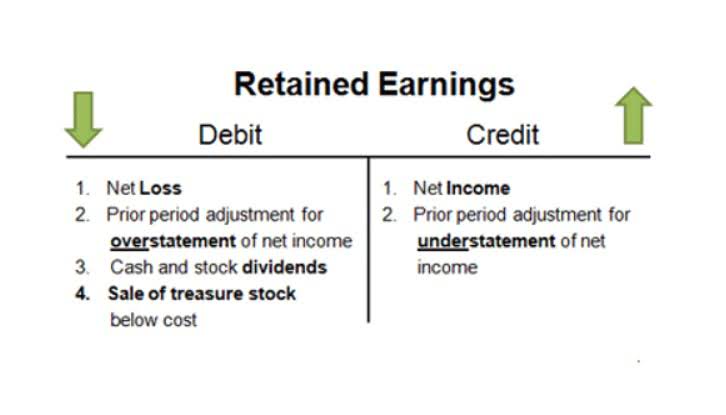
Investors and potential acquirers often use ARR as a metric to assess the health and potential growth of a company. Leveraging ARR, enterprises can pinpoint their Retained Earnings on Balance Sheet premium customers and endeavor to retain them. Concurrently, they can discern potential churn candidates and institute preventive measures. Beyond its predictive capabilities for future revenues, ARR facilitates the ideation of innovative monetization strategies for the present clientele.
Examples of ARR in action
- In today’s competitive business landscape, achieving sustainable growth and financial stability is paramount for organizations across industries.
- The ARR multiple is a method to quantify the implied valuation of a SaaS company into a valuation multiple, facilitating comparisons to peer companies and the industry benchmark.
- In this article, you will learn how to calculate, visualize, and interpret metrics like monthly recurring revenue (MRR) and annual recurring revenue (ARR).
- For businesses starting out on a budget, Shopify offers several high-quality free themes that are fully customizable and optimized for performance.
- This will probably be the main reference plot when it comes to tracking recurring revenue.
- Tracking MRR and ARR are an important start for understanding where a company is growing or starting to lose out on paid users.
As your business grows, Shopify Plus provides the scalability and advanced features needed to manage higher volumes of sales and traffic. Enterprise merchants benefit from enhanced API limits, dedicated support, and customizable checkout options. Shopify Plus also allows for greater control over automation through Shopify Flow, which helps streamline repetitive tasks like order tagging, customer segmentation, and inventory updates. This level of automation frees up your team to focus on innovation and customer engagement.
Shopify B2B Solutions: Optimizing Your Store for Wholesale
Recurring revenue encompasses income from various billing cycles, such as monthly, quarterly, or annually. Having a steady stream of income allows you to focus on future growth and innovation rather than constantly chasing down new customers. Recurring revenue models offer this consistent cash flow, supporting businesses as they grow and scale. Optimizing your ARR is essential for maximizing the growth potential of your subscription-based business. ARR measures your company’s revenue momentum and serves as a foundation for long-term scalability.

Annual Recurring Revenue (ARR) = Monthly Recurring Revenue (MRR) × 12
ARR helps forecast future revenue more accurately than metrics focusing on one-time sales. This is crucial for business planning, budgeting, and overall financial stability. What initially appears straightforward can quickly become problematic, which often leads to calculation errors, as well as inaccurate interpretations. To achieve sustainable growth on Shopify, businesses must go beyond basic store setup.