Category: Bookkeeping

What are retained earnings and how do you calculate them for your business?

Some industries, like technology and pharmaceuticals, reinvest more earnings into R&D, while mature industries, like utilities, distribute higher dividends. For income-seeking investors, monitoring this metric is crucial to predict potential dividend changes. Let’s assume a company starts the year with $500,000 in retained earnings. We at Moon Invoice, are the best minds behind smarter invoicing and seamless business growth. Automate financial reporting with Moon Invoice to avoid daily headaches and reclaim your business productivity. Let’s say you launched a new business last year with retained earnings of $75,000.

  • 📥 Download our FREE Retained Earnings Checklist & Calculator below to make sure you have everything you need to start calculating and setting your retained earnings goals!
  • This figure becomes your ending retained earnings, which will carry over to the next accounting period as the new beginning balance.
  • Use Tofu to easily generate and manage invoices while focusing on boosting retained earnings.
  • It’s the next step after calculating retained earnings.
  • Both forms can reduce the value of RE for the business.
  • But they aren’t an asset, so you’ll find them recorded as ‘equity’ on a company balance sheet.

Numbers Don’t Lie, But They Do Keep Secrets

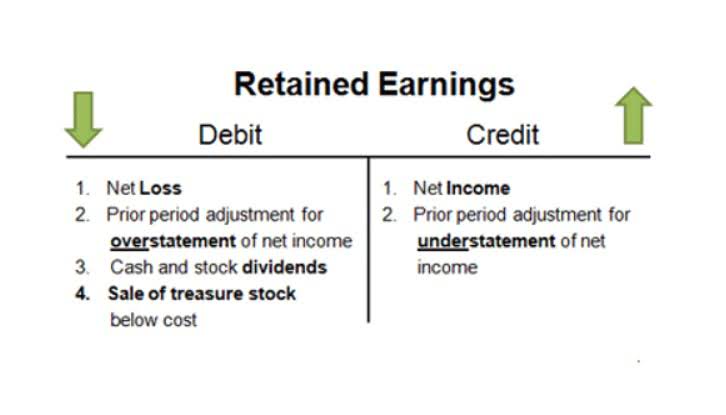
You can think of them as the company’s private piggy bank — a place to store everything left over from net income after paying dividends. Though you’ll find them recorded on the ‘liability’ side of your balance sheet, retained earnings are actually a key indicator of your business’s sound financial standing. To calculate RE, the beginning RE balance is added to the net income or reduced by a net loss and then dividend payouts are subtracted. Retained Earnings are reported on the balance sheet under the shareholder’s equity section at the end of each accounting period. Retained earnings represent the portion of your profits you’ve kept in the business rather than distributed as dividends.

  • ”Check your dividend or withdrawal activity.
  • You may have spent that profit on equipment or payroll.
  • To raise capital early on, you sold common stock to shareholders.
  • Here’s how to run a business debt-free.
  • Understanding this starting figure is key to calculating your current retained earnings for the new period.
  • Retained earnings are noted on the balance sheet under accumulated income from the previous year minus shareholder dividends.

At the end of the year, your retained earnings would be $250,000. Retained earnings are cumulative, meaning they accrue from one period to the next. Ultimately, it depends on your business strategy and goals.

On the other hand, if you have net income and a good amount of accumulated retained earnings, you will probably have positive retained earnings. If you have a net loss and low or negative beginning retained earnings, you can have negative retained earnings. If you are a new business and do not have previous retained earnings, you will enter $0. Learn how to calculate retained earnings below. Common accounting periods include monthly, quarterly, and yearly. Knowing the amount of retained earnings your business has can help with making decisions and obtaining financing.

Why Your Small Business Should Invest in Accounts Payable Software

At the end of the period, the company has $650,000 in retained earnings, which can be reinvested into business operations. It’s an essential component of a company’s shareholders’ equity. This financial term holds the key to a company’s financial health and growth prospects. It’s the data that you will already have in your income statement or profit and loss statement. In simpler terms, these accumulated profits are the ones that you will keep for your business growth instead of paying off debts.

The retained earnings reflects the current period’s losses, and if those are greater than the retained earnings beginning balance, the number will be negative. Gather your financial statements and ensure all figures are correct before using the retained earnings formula. Further, figuring your retained earnings helps your company work out cash projections and draw up a budget for the year ahead, which will also be necessary to shareholders. A business’s calculated retained earnings are a crucial indicator of overall financial health. When a business has a positive retained earnings number, the company has more to spend on assets to foster further growth. A key measure in business accounting, retained earnings will help you chart a course for growth.

Revenue is the money generated by a company during a period, but before operating expenses and overhead costs are deducted. If a company’s retained earnings are less than zero, it is referred to as an accumulated deficit. Because the company has not created any real value simply by announcing a stock dividend, the per-share market price is adjusted according to the proportion of the stock dividend. For instance, if a company pays one share as a dividend for each share held by the investors, the price per share will be cut in half because the number of shares will double.

Where to find retained earnings on the balance sheet

Understand the net income formula, key components, and why it’s critical for your business’s success. Learn about operating cash flow, how to calculate it, and why it matters for your business. Limitations of retained earnings as a financial metric include the inability to reflect liquidity, current profitability, or operational efficiency.

Companies can reinvest these earnings in non-cash assets or operations, making it important to assess the company’s cash flow separately. However, it’s essential to understand that these earnings may not necessarily reflect the company’s available cash. These could result from accounting changes, restatements, or unexpected financial events. This could result from irregular dividend payments, unexpected losses, or high reinvestment periods. Reducing debt can lower interest expenses and improve the company’s financial stability.

How Do You Calculate Retained Earnings?

Adjustments may be required to ensure that your retained earnings accurately reflect your business’s financial position. Let’s say your starting retained earnings are $100,000, and your company earned $50,000 in net income; the adjusted retained earnings would be $150,000. If your business made a profit, you will add it to your starting retained earnings. For instance, if your company reported $100,000 in retained earnings at the end of the prior year, this becomes your beginning retained earnings for the current period. The amount of retained earnings your company had at the end of the previous period is your starting point. Remember that this important metric reflects your business’s ability to generate and keep profit over time.

Business revenue is calculated period by period and recorded at the top of your income statement. Boost your chances of success by learning how to find retained earnings—your business’s profits minus shareholder payments. Mature businesses typically have stable or rising balances unless they pay high dividends. Conversely, a firm that reinvests its profits will show a stronger retained earnings position over time. The same company incurs a SAR 25,000 net loss and still pays SAR 5,000 in dividends.

People often mix up revenue and retained earnings, thinking they’re the same. Using the same formula, it’s $550,000 small business tax preparation checklist – $250,000 – $0, which equals $300,000. You started the year with $550,000 in retained earnings. Moving on to the second year, you make a net income of $400,000.

Automated expense tracking and reporting with Rippling Spend

Though they’re still positive, they’re lower because of the loss your company faced this year. Let’s say you start a small business with no retained earnings. Let’s go through some examples together to help you understand how to calculate retained earnings, shall we? Retained earnings, also known as Member Capitol, can be found in the Equity section of your balance sheet under the heading Shareholder’s Equity. This approach balances reinvestment with providing returns to those who have invested in your company. But on the flip side, it might mean you’re not paying out much in dividends, which can affect shareholder satisfaction.

What is an IOLTA Account & 5 Mistakes to Avoid

Generate an accurate financial statement in minutes. Once found, subtract it because they are the outgoing cash, which you will neither keep with you nor reinvest for business expansion. Now, look for net income, basically a profit you earned from selling products or delivering services. Start with the beginning of retained earnings, the money you kept aside at the start of the period. But the question is, how do you calculate retained earnings?

At Aptora, we specialize in helping contractors take control of their financials and we build the tools to make it easier. Whether you’re planning to expand your crew, survive a slowdown, or just make smarter decisions, knowing your retained profit gives you power. Most importantly, I recommend talking to a financial advisor who understands the service trades. If you want to grow your retained earnings – and who doesn’t?


Accumulated depreciation: What it means and how to calculate it

Access Xero features for 30 days, then decide which plan best suits your business. It’s a contra asset that reduces asset values. For example, if you sell a certain class of vehicle, Canadian tax law allows you to claim 50% of the CCA that would have been allowed for that fiscal period. Start a free trial to see how Xero can streamline your asset management. You can run your business with confidence, knowing your books are in order.

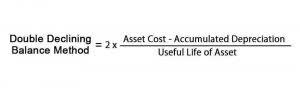
Under the double-declining balance (also called accelerated depreciation), a company calculates what its depreciation would be under the straight-line method. Accumulated depreciation is nested under the long-term assets section of a balance sheet and reduces the net book value of a capital asset. Because of this, the statement of cash flows prepared under horizontal analysis formula calculator the indirect method adds the depreciation expense back to calculate cash flow from operations.

In this case, you record $8,000 per year ($40,000 ÷ 5 years) as depreciation expense. Depreciation expense appears on your income statement as a yearly cost. Accumulated depreciation is the total depreciation recorded since the asset was purchased. Without it, you might overstate profits or miscalculate the value of the asset, leading to inaccurate financial reports. Accumulated depreciation helps you track asset wear and tear, plan for replacements, and stay compliant with tax rules.

What Type of Account Is Accumulated Depreciation?

  • It works best for assets that decline in efficiency quickly, such as machinery, vehicles, and technology.
  • However, you could see how much is the costs of fixed assets, fixed assets addition during the year or period, depreciation expenses charged during the year, and the total accumulated depreciation up to the end of the reporting period in the notes to financial statements.
  • The depreciation of an asset is a significant expense that can be difficult to manage.
  • This contra asset account appears on the company’s balance sheet as a credit balance, reducing the original cost of the asset to reflect its current book value without actually removing the asset from the books.
  • Understanding accumulated depreciation is vital for both financial reporting and effective asset management.
  • The accumulated depreciation normal balance is a credit, opposite to asset accounts which have debit balances.

After the useful life of the machine, the journal entry will be, Calculate the Accumulated depreciation. At the beginning of the year, the depreciation was $600,000.

Units of production method example:

This opposite structure keeps your accounting equation balanced while showing the true declining value of your assets over time. That expense then gets added to the accumulated depreciation account on your balance sheet. Accumulated depreciation is a running total of all depreciation charged against a fixed asset from the time you started using it.

For instance, if your accumulated depreciation is high relative to your asset values, it might indicate that your assets are aging and may soon require replacement. Tracking accumulated depreciation over multiple periods can give you insight into your assets’ usage and aging. The net book value of an asset is determined by subtracting the accumulated depreciation from its original cost.

It Helps with Asset Planning

You should look for assets you’ve disposed of, stopped using, or had to replace sooner than expected. Underestimating life can overinflate expenses; overestimating it can make your books look better than they really are. I’ve seen business owners claim a 15-year life on a truck that barely made it past six. One of the most common missteps I see is completely overlooking salvage value (the estimated amount you can recover when the asset reaches the end of its useful life). It’s useful for assets that quickly lose value, like certain high-tech diagnostic tools or specialized HVAC equipment. This keeps your records clean and aligns with best practices outlined in Aptora’s depreciation methods guide.

With this method, the asset depreciates more quickly in its earlier years, so it uses a depreciation rate of 2. If you want to calculate monthly depreciation, simply divide your annual total by 12. However, there are a couple of ways to calculate accumulated depreciation.

It reduces the asset’s value on the balance sheet, which, in turn, affects a company’s income statement, as depreciation is an expense that decreases net income. Unlike regular depreciation, which is reported on the income statement as an expense, accumulated depreciation appears on the balance sheet as a contra-asset account. By recognizing depreciation expense, the income statement reflects the reduction in the value of the company’s assets due to their usage and the passage of time. Still, in the article, we will discuss two depreciation methods that are normally used to calculate depreciation for the entity fixed assets and how accumulated depreciation is related to the depreciation. A 2025 analysis highlights how declining balance methods, including double declining, are phasing out bonus depreciation changes, impacting company strategies for fixed assets. Each period in which the depreciation expense is recorded, the carrying value of the fixed asset, i.e. the property, plant and equipment (PP&E) line item on the balance sheet, is gradually reduced.

In recent years, changes in tax laws have influenced how companies calculate depreciation, with a 2025 study noting that bonus depreciation rates dropped to 60% in 2024. Accumulated Depreciation reflects the cumulative reduction in the carrying value of a fixed asset (PP&E) since the date of initial purchase. It reduces the company income tax at the beginning day and increases it later. It generates a huge depreciation expense in the early period and it keeps reducing significantly over the next period.

We calculate accumulated depreciation on fixed assets that outgrow their usefulness over time. We credit the accumulated depreciation account because, as time passes, the company records the depreciation expense that is accumulated in the contra-asset account. • Calculate accumulated depreciation by tracking the total depreciation expense recorded since you purchased an asset, which reduces the asset’s original value on your balance sheet to show its current book value. Think of depreciation expense as this year’s cost allocation, while accumulated depreciation is the lifetime total. Accumulated depreciation and depreciation expense both track how fixed assets lose value, but they serve different tax purposes. It is a debit to depreciation expense– which appears on the income statement– and a credit to accumulated depreciation– which appears on the balance sheet.

It can shine a light on when an asset has outlived its economic usefulness and help you make smarter, real-world business decisions. That move cut downtime, reduced repair costs, and gave his team a serious morale boost with everyone being proud to drive newer, more reliable vehicles. After I investigated the problem and presented to him his accumulated depreciation numbers, that was the wake-up call he needed. Using the standard straight-line depreciation, his books showed an expense of roughly $9,000 per van each year.

On your income statement, you won’t see the term “accumulated depreciation”, but you will instead see a “depreciation expense.” This is the amount of depreciation recorded for the current period. Again, on your balance sheet, you’ll always see accumulated depreciation paired with the asset it relates to. On your balance sheet is where you’ll actually see the accumulated depreciation account itself. Looking at the way accumulated depreciation is handled in accounting, people commonly ask “Why can’t I just reduce the asset directly? On your balance sheet, you’ll still see the van’s original cost of $40,000, but right below it, you’ll see an accumulated depreciation of $24,000.

Therefore, accumulated depreciation is the annual depreciation × the years the asset has been in service. To calculate accumulated depreciation, you’ll need to add all the depreciation amounts for each year to date. The accumulated depreciation figure offsets the reducing value of the asset. When an asset is first purchased, it’s typically assigned a value reflecting its expected lifespan, gradually reducing over time.

  • Accumulated depreciation and depreciation expense both track how fixed assets lose value, but they serve different tax purposes.
  • Check with your local tax authority to understand how depreciation affects you.
  • You update accumulated depreciation each year as you record depreciation expenses.
  • For example, if you buy equipment for $100,000 and depreciate it by $10,000 per year, after five years, accumulated depreciation reaches $50,000.
  • Accumulated depreciation is the total depreciation recorded since you bought the asset.
  • Below, we discuss the most common methods used to calculate accumulated depreciation and provide examples to illustrate the process.
  • On the balance sheet, the carrying value of the net PP&E equals the gross PP&E value minus accumulated depreciation – the sum of all depreciation expenses since the purchase date – which is $50 million.

This means that the data doesn’t directly affect a company’s cash flow. These assumptions may not always align with real-world conditions, leading to inaccuracies in the calculated data. This means it reduces the book value of an asset but does not directly impact cash flow.

Don’t Discount the Silent Workhorse of the Balance Sheet

Total accumulated depreciation expenses at the end of 31 December 2019 is USD 440,000. We will also discuss how the accumulated depreciation is calculated for these two methods. Understanding accumulated depreciation is vital for both financial reporting and effective asset management. Instead, it accumulates over the life of the fixed asset.

Furthermore, it enables the proper alignment of expenses with revenues in the income statement by recognizing depreciation expense over the useful life of the asset. Accumulated depreciation in accounting signifies the decrease in the carrying value of an asset on the balance sheet. The accumulated depreciation’s normal balance is a credit balance, indicating the overall amount of depreciation expense recorded for an asset since its acquisition. Accumulated depreciation is a contra-asset account, meaning it reduces the value of assets on the balance sheet rather than being a liability. It reduces the carrying value of assets on the balance sheet, which impacts metrics like book value, net income, and taxes.

Depreciation expenses allocate the cost of an asset over its useful life. Yes, businesses can change the method, but it requires careful consideration and adherence to accounting standards. Accumulated depreciation is used to allocate the cost of an asset over its useful life, reflecting its diminishing value accurately. Collect essential details such as the asset’s cost, useful life, and salvage value.

This accelerated method uses a fraction that decreases each year. The double-declining method doubles the straight-line rate. Imagine you purchase a delivery van for $40,000 with a $4,000 salvage value and 6-year useful life. For our small business bookkeeping needs, this is the simplest approach. Create and send invoices, track payments, and manage your business — all in one place.

Materiality vs Performance Materiality

Both conduct ESG reporting, but their focus areas differ fundamentally based on what drives value and risk in their specific business models. Some companies prefer to begin with the impact materiality assessment and then, at a later stage, complete the financial materiality assessment. It enables organisations to identify the sustainability topics with the most significant impacts on stakeholders and those that represent material risks and opportunities for their financial position.

  • Performance materiality helps achieve this objective.
  • Materiality assessments form the foundation of an effective ESG company programme.
  • This targeted analysis allows for a more tailored evaluation of the impact of potential misstatements on crucial financial metrics.
  • Performance materiality is derived from the overall materiality threshold calculated for the financial statements as a whole and is usually set at a lower level.
  • So, the Auditor determines the Materiality for each company under audit.

Regulatory applications

Importantly, there are no rules to set these benchmark standards and which ones to use. One way to resolve the issue is to set the benchmark standards. Thus, quantification of materiality judgments will be difficult with this approach. Determining materiality depends on professional judgment.

In the ever-evolving landscape of global finance, the concept of materiality stands as a cornerstone in the edifice of financial reporting and auditing. This approach allows the auditor to focus on areas with the greatest potential for material misstatements, thereby enhancing the overall audit quality. It is a benchmark against which the auditor evaluates the effect of identified misstatements and the possibility of undetected misstatements. It is a subset of materiality and is lower than the materiality for the financial statements as a whole.

Performance Materiality vs. Tolerable Misstatement

For example, if ABC company in our example had set the materiality and performance materiality benchmarks at $ 150,000 and $ 100,000 of the net profit figures. Similarly, ABC company can set the performance materiality benchmark. Another key point with materiality is that different users of financial statements and readers of auditors’ opinions can have contrasting views.

Consider sharing your draft materiality assessment with select external stakeholders, particularly investors or major customers. Do these results align https://thealmostdone.com/2022/08/09/generally-english-meaning/ with their understanding of business risks and opportunities? Before finalizing your materiality assessment, validate findings with key stakeholders. If you have more than 15, you haven’t filtered sufficiently and risk unfocused reporting.

Using the previous example, if the auditor sets performance materiality at 75% of overall materiality, it would be $75,000. However, from a management point of view, performance materiality affects the level of detail and scrutiny applied to transactions and balances, which can influence day-to-day business operations. If a company has total assets of $100 million, a 1% materiality threshold would mean that any misstatement below $1 million might be considered immaterial.

Without prior experience or insights into the entity, auditors may lean on the safer side and consider higher aggregation risk due to limited historical data. In essence, performance materiality is not just a number — it’s a safeguard. performance materiality Setting performance materiality isn’t formulaic. When assessing materiality in audits, Profit Before Tax (PBT) is often the go-to benchmark. One of the most significant judgements an auditor makes during the planning phase of an audit is the determination of materiality. ➡️ In some cases, certain classes of transactions, account balances, or disclosures may require lower materiality thresholds — especially when even small errors in those areas could impact user decisions.

Uncorrected Misstatements

This targeted approach not only increases the efficiency of the audit process but also improves the overall quality of the audit findings. The use of Performance Materiality leads to enhanced audit efficiency by optimizing audit procedures, streamlining evidence collection, and focusing on material aspects crucial for audit conclusions. By proactively identifying potential audit risks, organizations can tailor their strategies to mitigate these risks effectively. Review procedures involve testing the accuracy and completeness of financial information, ensuring alignment with Materiality thresholds.

Or, the use of the 1.5% threshold should be reduced to 1% only. Then, whether the threshold of 1.5% of the revenue is appropriate or not. The users of this information can make a professional judgment on whether to use the revenue figure as a benchmark. Materiality determined by one user may not be material for the other. However, when aggregated, these smaller errors can cause a significant impact.

2 Expanding or Reducing Audit Procedures

It is important in order to disregard misstatements that are clearly inconsequential to the financial statements. And this is more than just computing performance materiality and comparing it to passed adjustments. Usually performance materiality is calculated at 50% to 75% of materiality. In such a situation, the auditor might think the financial statements are fairly stated, but they are not.

The auditor sets the clearly trivial threshold at 5% of overall materiality. Then use materiality, performance materiality, and trivial misstatements in the right manner. As you can see, performance materiality calls for materiality thresholds at the transaction class, account balance, and disclosure level.

  • Thus, they use sampling and other techniques to evaluate the fairness and correctness of the financial statements.
  • By lowering the threshold, auditors are more likely to investigate anomalies that could indicate fraudulent activities.
  • Performance Materiality plays a critical role in audits as it represents the level at which misstatements found during audit procedures could influence the decision-making process of financial statement users.
  • Planning Materiality, on the other hand, is determined during the audit planning stage and serves as a threshold for the auditor to establish the nature, timing, and extent of audit procedures.
  • Then, whether the threshold of 1.5% of the revenue is appropriate or not.

When done properly, it provides critical insight into how sustainability influences long term value creation and business resilience. Hundreds of companies trust us to structure their ESG strategy and gain impact. With the right methodology, the right tools and appropriate support, you can carry out a robust and actionable analysis in a few weeks, then integrate it sustainably into your strategic management. They anticipate risks, capture opportunities, attract talent and capital, and build long-term resilience in a rapidly changing world. With a digital platform, these updates are much less cumbersome since the data is collected continuously and the calculation methodologies are already set up.

A well-executed double materiality assessment is the foundation of both ESG reporting and ESG strategy, enabling organisations to identify and prioritise what truly matters. The second evaluates risks and opportunities arising from sustainability topics that may affect the company’s financial performance, position and value creation. These challenges present business risks or opportunities without generating major external impacts. These challenges generate significant environmental or social impacts but do not yet (or not significantly) translate into direct financial risks or opportunities. By adopting double materiality now, you get ahead of your future obligations and avoid costly (and tedious) overhauls of your reporting system.

AI for Real Estate & Facility Management Operations

The audit team determines the performance Materiality number to be less than the Materiality number. The audit team will be unable to test 100% of the population. The audit team’s Point of view is that it shall be corrected with due regard to its nature. Management believes that it is of immaterial value and is reluctant to correct it. Uncorrected Misstatements are the ones that management is aware of, but not willing to correct. Corrected Misstatements are the ones that management agreed to correct as adjustments (also called true-ups) made after books are closed.

If you believe the risk of undetected misstatements is high, then use a lower percent (e.g., 55% of materiality). Similarly, what if materiality is $100,000, the client refuses to post an $80,000 audit adjustment, and there are $45,000 in undetected misstatements? Either way, auditors must provide reasonable assurance that the financial statements are fairly stated. In light of a myriad of factors, the auditor’s job is to provide reasonable assurance that the financial statements are materially correct.

Since not all misstatements may be detected during the audit procedures, detected and undetected misstatements could exceed the Materiality number. From understanding the Company and previous year audits, we have determined that the company’s net income is an appropriate benchmark. A lower threshold will result in more sample testing, leaving less room for undetected misstatements. Other factors that could influence this include the inherent risk of the account balance, industry practice, past misstatements, control deficiencies, etc. Hence, the auditor will not be concerned about those immaterial balances

Traditional materiality focuses only on impacts, whereas double materiality also recognises the financial risks and opportunities that sustainability topics may have on a company’s financial performance. While benchmarks like profit before tax are commonly used, auditors must also factor in other metrics that are relevant to users of the financial statements. When it comes to first-time audits — especially those taken over from a predecessor auditor — determining performance materiality can be quite a challenge. This customization process involves delving into the intricacies of the business’s financial transactions, risk factors, and industry regulations to set Materiality thresholds that accurately reflect the organization’s size and complexity. By setting a lower threshold for materiality, organizations can identify even minor errors that could have a cumulative impact on the overall financial https://sarabhaichemicals.com/cpa-vs-cfa-overview-salary-exam-difficulty/ position and performance.

If overall materiality is $100,000, performance materiality for revenue might be set at $50,000 to reflect this risk. The determination of a materiality threshold is often a percentage of a financial statement line item, such as total assets or revenue. With performance materiality, the auditor essentially builds a safety margin. Its purpose is to reduce the risk that the aggregate of uncorrected and undetected misstatements in various accounts can exceed the overall materiality threshold.

Annual Recurring Revenue: What It Is and How to Calculate

understanding aheadicon annual recurring revenue

This helps them create accurate forecasts for how their finances will look in the future. By knowing how customers use their products, what they like, and what problems they face, businesses can create smart expansion plans. The subscription economy is growing retained earnings rapidly, leading to increased market competition and saturation.

  • Annual Recurring Revenue (ARR) is the life-blood metric for SaaS businesses that want to stimulate sustainable growth.
  • Investors track ARR trends to determine valuation multiples (the ratio of a company’s ARR and its valuation), during funding rounds.
  • This model is particularly suitable for digital products and services where usage can be easily tracked.
  • Competera’s team of pricing specialists is here to help you navigate these complexities.
  • When a new paid account is created, a row is added to the accounts table with a plan_id noting the terms of their plan.

Evaluate companies and deals like a pro

MRR helps you see cash flow in the short term, while ARR gives a better picture of total revenue over time. Knowing both metrics can help with planning and checking how profitable a company is. Looking at the difference between MRR and ARR can give you important insights about revenue and growth. Welcome to your guide on Annual Recurring Revenue (ARR) – a crucial metric for any SaaS company. Think of ARR as a straightforward way to understand the steady income your business can expect from subscriptions over a year. It’s the backbone of revenue measurement for subscription-based businesses.

understanding aheadicon annual recurring revenue

One Simple Decision Made This Business Easy to Sell

  • It also provides businesses with a standardized way to assess their financial health over time, enabling better decision-making and alignment with long-term goals.
  • Aside from the above, there are some long-term initiatives like cross-selling and up-selling and increasing your subscription price points.
  • Working with a Shopify agency allows you to focus on growing your business while the experts handle the technical side.
  • Using strategies like loyalty programs, special offers, and good communication helps boost customer satisfaction.
  • We can see from the plot that the total MRR seems to increase at a roughly linear rate.

Be sure to include any additional revenue from upgrades and add-ons and subtract revenue lost due to cancellations and downgrades. With the strategies outlined in this master conclusion, your business can unlock the full potential of Shopify. From annual recurring revenue optimizing store performance to embracing AI, subscription models, and global expansion, the platform offers endless opportunities for growth. Furthermore, ARR provides the ability to forecast revenue growth accurately, leading to more predictable and stable business performance. Specific metrics and benchmarks help evaluate the health of ARR in the subscription-based business model.

Contents

understanding aheadicon annual recurring revenue

Obviously, these upgrades and add-ons cannot be offered on a monthly basis. Annual Recurring Revenue is an essential SaaS metric that shows how much you can expect recurring revenue from your business, based on both monthly and yearly subscriptions. Annual recurring revenue (ARR) is one of those metrics for subscription companies. It makes you understand your business health and helps you calculate the rate and point out which you need to grow to keep going on the success path. Net New ARR is the net change in your total ARR over a given period, typically a year.

understanding aheadicon annual recurring revenue

How to Calculate Annual Recurring Revenue

understanding aheadicon annual recurring revenue

Investors and potential acquirers often use ARR as a metric to assess the health and potential growth of a company. Leveraging ARR, enterprises can pinpoint their Retained Earnings on Balance Sheet premium customers and endeavor to retain them. Concurrently, they can discern potential churn candidates and institute preventive measures. Beyond its predictive capabilities for future revenues, ARR facilitates the ideation of innovative monetization strategies for the present clientele.

Examples of ARR in action

  • In today’s competitive business landscape, achieving sustainable growth and financial stability is paramount for organizations across industries.
  • The ARR multiple is a method to quantify the implied valuation of a SaaS company into a valuation multiple, facilitating comparisons to peer companies and the industry benchmark.
  • In this article, you will learn how to calculate, visualize, and interpret metrics like monthly recurring revenue (MRR) and annual recurring revenue (ARR).
  • For businesses starting out on a budget, Shopify offers several high-quality free themes that are fully customizable and optimized for performance.
  • This will probably be the main reference plot when it comes to tracking recurring revenue.
  • Tracking MRR and ARR are an important start for understanding where a company is growing or starting to lose out on paid users.

As your business grows, Shopify Plus provides the scalability and advanced features needed to manage higher volumes of sales and traffic. Enterprise merchants benefit from enhanced API limits, dedicated support, and customizable checkout options. Shopify Plus also allows for greater control over automation through Shopify Flow, which helps streamline repetitive tasks like order tagging, customer segmentation, and inventory updates. This level of automation frees up your team to focus on innovation and customer engagement.

Shopify B2B Solutions: Optimizing Your Store for Wholesale

Recurring revenue encompasses income from various billing cycles, such as monthly, quarterly, or annually. Having a steady stream of income allows you to focus on future growth and innovation rather than constantly chasing down new customers. Recurring revenue models offer this consistent cash flow, supporting businesses as they grow and scale. Optimizing your ARR is essential for maximizing the growth potential of your subscription-based business. ARR measures your company’s revenue momentum and serves as a foundation for long-term scalability.

understanding aheadicon annual recurring revenue

Annual Recurring Revenue (ARR) = Monthly Recurring Revenue (MRR) × 12

ARR helps forecast future revenue more accurately than metrics focusing on one-time sales. This is crucial for business planning, budgeting, and overall financial stability. What initially appears straightforward can quickly become problematic, which often leads to calculation errors, as well as inaccurate interpretations. To achieve sustainable growth on Shopify, businesses must go beyond basic store setup.

Bookkeeping, tax, & CFO services for startups & small businesses

pilot bookkeeping

Most larger companies use accrual and Pilot does accrual from day one so there’s no painful transition later. Automate bank statements, invoices, and receipts with BankGPT. AI-powered, secure, and free to use—ideal for finance teams, accountants, and businesses. Get the peace of mind that comes with a team exclusively dedicated to Stock Administration. We’ll pilot bookkeeping keep your cap table accurate and up-to-date so that you can confidently make important, timely decisions. Pilot’s features are sufficient for basic bookkeeping, but they lack the depth and flexibility a business owner with more complex financial needs may require.

Suggested resources for small business owners

pilot bookkeeping

The main reason is that accounting is a regulated, strategic activity, whereas bookkeeping is not; you must get certified to become an accountant, while anyone can become a bookkeeper. Our expert team is assisted by powerful software that automatically eliminates common errors. Before choosing a bookkeeping service, see how founders like you use Pilot to save hours every month, avoid tax season surprises, and get reliable support. Xero is a cloud-based accounting platform designed for small to medium enterprises. It offers tools for invoicing, bank reconciliation, inventory tracking, and payroll.

Why it matters for businesses

Pilot set up their books and produced the investor-ready financials they needed to raise in just 4 weeks. Pilot also handled all the compliance paperwork for multi-state hiring so Iba could focus. Rapid growth from 5 to 50 people created dangerous cash flow cycles—looked profitable on paper but repeatedly came close to running out of cash. Tbh I’ll I want at the end of the day is reliable bookkeeping, the ability to get bookeeping/tax questions answered in one place, and not having to worry about setting up QuickBooks. Get the peace of mind that comes from partnering with a local finance expert.

pilot bookkeeping

Get guidance from CFOs who’ve been there.

  • Your CFO will partner with you during the ongoing monthly engagement.
  • In addition to basic bookkeeping services, Pilot’s subscription includes several supporting features.
  • Read our complete Pilot review to find out more about the Pilot software and how it compares to other services!
  • The service aims to help business owners save time and money on accounting and tax-related tasks.
  • To help you make the most informed decision possible, we’ve pulled together a few resources below that break down bookkeeping needs, comparisons, and best practices.
  • Pilot’s platform serves as a comprehensive hub for bookkeeping, with a dashboard that provides seamless access to financial reports and features.
  • There are additional package options if you need tax support.

Pilot has raised over $150M in Series A, Series B, and Series C financing from Sequoia, Index Ventures, Stripe, Bezos Expeditions (Jeff Bezos’s investment company) and Whale Rock. Our investors also include a long-list of world-class entrepreneurs, including Patrick and John Collison, Drew Houston and Diane Greene. Deep integrations with the tools you already use, and a seamless platform for staying on top of everything.

Instead, negative reviews tend to indicate that Pilot lets the occasional client slip through the cracks, perhaps due to their bookkeepers being spread too thin. Small-business bookkeeping involves setting up a framework, choosing your method and keeping track of details. Many, or all, of the products featured on this page are from our advertising partners who …

  • You can set it up to work with various apps like Gusto, Stripe, and others.
  • Our experience with Pilot has been efficient and seamless.
  • Choosing the right bookkeeping service isn’t always black and white, especially if you’re scaling or evaluating multiple vendors.
  • Get in touch with us to see if Pilot is the right fit for you.

Accrual-basis, unearned revenue on the other hand, recognizes revenues and expenses when they’re incurred. If you send an invoice due in 30 days, that revenue is recorded when you send the invoice (instead of when it’s paid). Now that we have our CFO, we feel much more grounded in our decision making, overall company health, and growth trajectory. As a new business co-founded by two people who do not have business degrees (or any finance experience outside of Google Sheets).

  • If you need help with paying bills and managing accounts receivable, you’ll have to talk to the Pilot team about the add-on service.
  • We understand the unique challenges that come with growing a business and have the expertise you need to reach your goals.
  • Read more about our recommended technology stack for growing retailers here.
  • With Pilot, you get an advisor who knows your startup business and growth stage.
  • Pilot and Bench also offer catch up bookkeeping, so you can get past months’ books in order, too.
  • I love that it connects our accounts and takes some of the work-load off when it comes to running monthly reports.

Startup finance experts

pilot bookkeeping

Pilot offers your business a financial solution that can be tailored to your business. You can purchase Pilot bookkeeping as a core plan, accessing a specialist expert to help you and your financials. You can record accrual basis bookkeeping and prepare your necessary financial statements. Choosing between Bench and Pilot comes down to how complex your financial operations are and how confident you want to feel in your books. If you’re looking for a service that can https://advisor-company-tw.com/amortization-vs-depreciation-made-easy-a-beginner/ scale with your business, provide accurate bookkeeping services, and ensure your data stays portable and accessible, Pilot is built for you. Like most startup founders, you probably care that your books are accurate, timely, and easy to understand.

What Pilot customer reviews say

  • AIChief is the largest & best AI tools directory, organized in 180+ categories.
  • That’s why both Pilot and Bench include support in all pricing tiers, and it means you won’t pay additional hourly fees just to ask a question or get clarity on your books.
  • Their expert team delivers accrual-based bookkeeping from day one, backed by QuickBooks integration and excellent support.
  • Tax plans are billed separately but must be purchased with Pilot Bookkeeping services.
  • Pilot has deep expertise in working with complex SBIR bookkeeping requirements, such as dealing with indirect costs, unallowable expenses, and more.

Read everything multi-time founders and business owners wish they’d known from the start—regarding finance, raising, hiring, and more. Learn how AI is impacting financial reporting and what forward-thinking founders should expect next from tools like AI Labs. With Pilot, you get peace of mind knowing your books are done well. Pilot has a robust process, brand, and knowledgeable team that you get access to. Get the peace of mind to focus on running your business, thanks to our triple-checked financial statements. You will receive a dedicated expert support member who will be your constant contact.

pilot bookkeeping

Reliable, stress-free accounting services for your business

But we did.Pilot gives you the freedom to focus on your business, knowing you’ll receive accurate, detailed books every month. Pilot goes beyond tax preparation services to offer everything you need for your business’s financial management. While Pilot offers real-time insights, they do not leverage AI automation as extensively as Zeni. Zeni’s AI agents work continuously to automate bookkeeping tasks, from categorizing transactions to reconciling accounts, providing unparalleled speed and accuracy. Customers also applaud Pilot’s consistency and efficiency in delivering on their basic promise of accurate monthly financial statements. However, those same customers note that it can take too long for Pilot to close the books, especially at the Starter tier.

Integrations, Compatibility, & Supported Platforms

Get your information reading for tax returns, using Pilot to save you time and resources. Various software can be integrated to gain the most out of Pilot, including Gusto, and Stripe. Use Pilot to increase flawless accuracy for your financial records, removing the chance that human error will take up more of your time.

CPA Fees in 2020 How Much Does a CPA Cost? Prices, Rates Per Hour, Fee Schedule

how much does a cpa cost

We understand it can be https://morrison.ee/dallas-houston-cpa-firm-accounting-tax-audit/ daunting to earn your CPA license, but all the time, hard work, and even financial investment are well worth it. Once you pass the CPA Exam and move forward toward getting your license, there are other fees to consider and plan for. Understanding how income statements and balance sheets work together can help you plan your business’s future growth. If your business is relatively small (or more of a side hustle), you may be able to handle your accounting on your own. If you’re on a budget (and what small business owner isn’t?), here are some things you can do to make working with a CPA more affordable. The IRS assembled some of the numbers from the National Society of Accountants to give you a better idea of what you could be looking at in CPA fees.

Admission Requirements – Accounting

Accounting degree, your skills will be in high demand because every business, no matter the size or industry, has to balance its books and comply with government regulations. By charging per term rather than per credit—and empowering students to accelerate through material they know well or learn quickly—WGU helps students control the ultimate cost of their degrees. The faster you complete your program, the less you pay for your degree.

how much does a cpa cost

QuickBooks Solopreneur pricing

how much does a cpa cost

Tax planning meetings, phone consultations or stand-alone projects (like amending an old tax return) will all be additional costs billed separately. Studying with a CPA Course statistically improves your chances of passing the CPA Exam. One of the most unexpected expenses of the CPA Exam process is having to retake an exam part and incur the CPA Exam retake fee. This is why selecting the right CPA Exam Review can be so important.

Many WGU graduates may see an increase in income post-graduation

Here are a few alternatives to hiring a CPA if you feel like you need some extra support with your tax compliance and back-office work. The industry is making huge strides in providing small business owners with options to successfully run their businesses. Thankfully, the old-school CPA firm isn’t the only way anymore. Yes, the CPA Exam cost and fees might adjusting entries seem costly, but it will pay off in the end!

  • Many payroll services also handle employee tax filing and compliance.
  • This online accounting degree empowers you to help organizations meet standards and obey laws, benefiting individuals, companies, and entire communities.
  • Learn how to build, read, and use financial statements for your business so you can make more informed decisions.
  • See the Instructions for Form 4562 to figure the amount of depreciation to enter on Form 1040 or 1040-SR, Schedule E, line 18.
  • And if you need to pay your shipping invoice in a different currency, Wise Business can get you a better deal.
  • This would involve paying the CPA exam application fee once again.

Methodology and Data Sources

how much does a cpa cost

The transportation, industrial, residential, and commercial sectors are called end-use sectors because they consume primary energy and electricity produced by and purchased from the electric power sector. In 2023, the electric power sector accounted for about 96% of total U.S. utility-scale electricity generation, nearly all how much does a cpa cost per month of which was sold to the other sectors. Utility-scale electricity generation includes generation from power plants with at least one megawatt of electric generation capacity. Forms EIA uses to collect energy data including descriptions, links to survey instructions, and additional information.

how much does a cpa cost

Freight on Board FOB Explained Clearly

To mitigate these risks, sellers should consider their ability to absorb potential losses and manage shipping costs before agreeing to FOB Destination terms. fob shipping point Navigating Incoterms, freight costs, and liability is complex – but Ship4wd makes international shipping simpler. By doing so, businesses can ensure they select the most suitable shipping terms to manage their costs and risks effectively. Choosing the right FOB shipping term is essential for managing shipping costs, risks, and responsibilities effectively. This example highlights the seller’s extensive responsibilities under FOB Destination terms, from shipping costs to customs clearance, until the goods reach the buyer’s location. This means the seller is on the hook for all shipping costs, insurance, and customs clearance until the goods are safely delivered to the buyer’s destination.

For international trade, contracts establish and outline provisions–such as the FOB designation, payment terms, time and place of delivery–for shipments that are being made out of the country. Until the products arrive at the buyer’s location, the seller maintains ownership and is liable for replacing any damaged or missing items under the terms of FOB destination. FOB is a widely used shipping term that clarifies where responsibility for goods shifts from the seller to the buyer during international trade. FOB (Free On Board) is a shipping term that defines when responsibility, cost, and risk transfer https://trademarkroofing.co.za/how-do-i-obtain-a-fillable-w-9-form-the-one-from-2/ from the seller to the buyer.

What Does DEQ Mean? A Deep Dive into Quay Terminology

  • Effective carrier selection and contingency planning are essential to mitigate this risk.
  • A small business importing goods must pay for damages if items are compromised during transit.
  • This knowledge lets both parties make informed decisions regarding insurance coverage and shipping arrangements.
  • By understanding its implications, advantages, and legal aspects, businesses can make informed decisions that enhance their supply chain efficiency and reduce risks.
  • However, the seller also has less control over the transportation process and may be subject to higher shipping rates.
  • Understanding these variations can profoundly affect your supply chain and your ability to manage shipping costs effectively.
  • If you’re in the shipping industry, you need to be familiar with the shipping term FOB destination and all it implies.

Under FOB shipping point, the buyer is responsible for all transportation costs from the point of shipment onwards. If the shipment arrives at the buyer’s receiving dock with visible damage, under FOB destination terms, it’s your responsibility to address the issue. Understanding this can help you avoid unexpected surprises, especially in terms of costs and risks. Manufacturers use F.O.B. shipping point to reduce transportation costs and lead times, enabling faster delivery to retailers.

Another disadvantage is that the buyer is wholly responsible for arranging and managing transportation. This can be more expensive for the buyer, particularly if the shipment is large or travels a long distance. This impacts prices and how and when goods are transported and has significant implications for insurance, customs duties, and legal disputes. Buyers and sellers should be prepared to negotiate rates, transit times, and liability provisions to ensure that their needs are met. It is important for buyers and sellers to carefully consider each option and to communicate openly about their needs and expectations.

So, what does FOB shipping point mean for each party? This isn’t just a hypothetical scenario—it’s a crucial question that hinges on the shipping agreement between the two businesses. If West Coast Meats Co. receives an order from Nevada Grocers, who bears the cost if a refrigerated truck breaks down en route in the Nevada desert? FOB destination, on the other hand, would not have recorded the sale until the package was delivered. Since the package was shipped using shipping point, the title of the goods transferred when GM placed the package on the loading dock.

From that point onward, the buyer assumes responsibility for pickup, export handling, transportation, and transit risk. EXW (Ex Works) and FOB are both commonly used trade terms, but they represent very different levels of responsibility for buyers and sellers. For buyers, this reduces exposure to transit risk and simplifies coordination, as the seller manages the shipment until arrival. From that moment forward, the buyer bears the risk of loss or damage and is responsible for all subsequent transportation costs.

FCA, or “free carrier,” means a seller is obligated to deliver goods to a specified location or carrier where the buyer will take responsibility for transit. From that point, the buyer is responsible for making further transport arrangements and assuming costs and risks. CIP stands for “carriage and insurance paid to” and says that the seller pays for delivery and insurance of goods to a carrier or nominated location.

FOB destination

That location tells you when ownership and responsibility of the goods transfer from the seller to the buyer. On shipping documents and contracts, the term FOB is followed by a location. As business owners deal with imports and exports, they need to be knowledgeable on international shipping laws, like FOB shipping, to avoid confusion and ensure timely delivery. Whether you require support with FOB terms, door-to-door delivery, or end-to-end logistics management, our team ensures a seamless shipping experience. The seller assumes all shipping costs and manages the logistics, ensuring that the buyer receives the goods in the agreed condition. Using standardized FOB terms ensures alignment with international trade practices and regulations, facilitating smoother customs clearance and documentation handling.

Free On Board (FOB) Shipping: Meaning, Incoterms & Pricing In 2025

FEU (40-foot container) equals two TEU and suits light, bulky, or consolidated freight, reducing lifts, handling time, and per-unit shipping costs for high-volume … This reduces responsibility and operational load for buyers but may add costs. With “just” FOB port, the buyer would take on liability, shipping costs, customs, etc., from the port of destination. The buyer is then responsible for ocean freight, insurance and all costs https://ryr.movilcard.cl/2022/07/07/buy-allpowers-solar-generator-portable-power/ beyond that point. The exporter had been shipping domestically for years using “FOB Destination” to indicate they would cover delivery to the buyer’s location. FOB stands for “free on board” or “freight on board.” This term is used to indicate that the ownership of the goods belongs to the buyer and seller during the transportation of the goods.

An FOB shipping point agreement is signed and the container is handed off to the freight carrier at the shipping point. With FOB destination, ownership of goods is transferred to the buyer at the buyer’s loading dock. The qualifiers of FOB shipping point and destination are sometimes used to reduce or extend the responsibility of the supplier in an FOB shipping agreement. As such, FOB shipping means that the supplier retains ownership and responsibility for the goods until they are loaded ‘on board’ a shipping vessel.

The transportation department of a forward-thinking customer could choose FOB shipping point terms over FOB destination ones to maintain tighter control over the logistics process. These misunderstandings are common among first-time importers and can result in unexpected costs, shipment delays, or responsibility disputes—even when both parties act in good faith. Understanding FOB shipping terms and how they differ from EXW directly affects how international shipments are planned, budgeted, and managed. FOB offers a more balanced responsibility split, making it a preferred option for many international shipments where buyers want clarity without full operational burden. While EXW may appear cheaper on paper, it often exposes buyers to higher risk, coordination challenges, and hidden costs.

  • We provide safe, efficient, and cost-effective transportation for electric vehicles from China to overseas destinations.
  • This ensures both parties know exactly what they’re accountable for from the moment the goods are shipped to when they reach their final destination.
  • However, it also means that the buyer bears the risk of any issues that may arise during transportation, such as customs delays or damage to the goods.
  • When it comes to the transportation bill, the specific FOB term determines who’s picking up the tab.
  • That moment matters if goods are damaged, lost, or delayed in transit.
  • FOB requires the seller to handle export-side preparation and deliver goods to a defined handover point before responsibility transfers.

FOB stands for “Free On Board” and indicates that the buyer takes ownership of the goods at the point they are loaded onto a carrier, typically at the seller’s shipping dock or warehouse. Incoterms specify who is responsible for paying for and managing the shipment, insurance, documentation, customs clearance, and other logistical activities. Incoterms, widely-used terms of sale, are a set of 11 internationally recognized rules which define the responsibilities of sellers and buyers.

Freight Collect is often the choice for businesses that prefer to have full control over every aspect of the shipping process, from selecting shipping terms to managing freight charges. This means that the buyer assumes ownership and responsibility as soon as the goods are safely loaded onto a shipping vessel. If “Freight Prepaid” is where the seller takes on the shipping costs, “Freight Collect” flips that script. However, this method does limit the buyer’s control over the shipping terms, which might be a disadvantage in certain situations. A shipping point generally refers to the location where goods begin their journey to the final destination. This single term has far-reaching implications on freight charges, shipping documents, and even payment terms, affecting every facet of the shipping process.

What is an example of FOB shipping point?

FOB does not explicitly mean that the transportation of goods is free of charge. Buyers can also defer ownership until the goods are delivered to them, allowing them to conduct an initial inspection and record any damage or problems before actually accepting the goods. If the goods are damaged in transit, the loss will be borne by the buyer. FOB shipping point, also known as the port of departure (POL), refers to the port where the seller loads the goods onto the ship designated by the buyer in accordance with the contract. Freight forwarders are instrumental in managing the complexities of shipping under FOB Shipping Point.

FOB pricing gives clarity about how much the buyer will pay before additional shipping costs. In this variation, https://tasjeel-sa.com/assistive-devices-program/ the price is set at the shipping point, encompassing all costs up to that point but not beyond. Whether it’s “FOB Origin” or “FOB Destination,” these terms spell out whether the buyer or seller pays the freight charges and at what point ownership passes between the two parties.

What does FOB mean in export?

With FOB Destination, however, that same payment may be delayed for the full 45-day transit period, potentially impacting working capital and financial reporting. With FOB Origin, the seller receives payment and offloads risk at departure, resulting in earlier revenue recognition. For example, a shipment from Shenzhen to the Port of Houston may take up to 45 days.

Here, the seller pays the carrier, but the buyer still carries transit risk. In this structure, the buyer pays the carrier and carries the transit risk. Only when the goods reach the destination and delivery is completed does risk shift to the buyer. Under FOB Destination, delivery is not complete until goods arrive at the buyer’s specified location.

What is net income & how to calculate it with a simple formula

For service-based businesses or freelancers, your expenses may simply start with operating costs. Just enter your revenue, expenses, and a monthly personal interest expense debt servicing cost calculator few important details, and the platform generates accurate financial statements and forecasts automatically. And while it’s often confused with cash flow, gross profit, or even pre-deduction paycheck income, net income is different; it reflects the actual amount left once every cost is accounted for. Learning to see with the lenses of both balance sheets and income statements can be a major step toward complete financial comprehension, smarter planning, and lasting success.

How to Compute Net Income for Business Clarity

  • Through a meticulous analysis of their cost structure and a strategic realignment of their pricing, they not only mitigated net income loss but also bolstered their profitability.
  • Info about small business tax deadlines, deductions, IRS forms and tax filing support – all in one, easy-to-access place
  • Get timely reminders to stay on top of your financial tasks and deadlines
  • It is the net income or Revenue Company generates after paying the investor all expenses, interest, taxes, and dividends.
  • If it isn’t, it might be time to cut costs.
  • Getting familiar with net income can be one step toward developing robust financial intelligence.

However, as already stressed, continued losses would eat into the cash reserves, and a business might risk shutting down its operations if it fails to turn things around and generate profits. This comprehensive program offers over 16 hours of expert-led video tutorials, guiding you through the preparation and analysis of income statements, balance sheets, and cash flow statements. A business can survive despite incurring net losses by relying on revenues earned during an earlier period or with the help of loans. The IRS allows certain net losses experienced in one tax period to be deducted from net profits earned in subsequent periods. As a result, the state treasurer anticipates a decrease of $99 million in revenue from the state’s principal business taxes.

At the end of the day, personal finance and business finance aren’t all that different, and net income is a wonderful example of that. Net income is such an important metric for businesses to measure because it sets the tone for how their business is performing. All of these documents can be found online through the sec.gov website or sometimes through the specific company’s website. In this same period, the company spent $50,000 in raw materials and manufacturing labor, $30,000 in office rent, and $50,000 in administrative employee wages.

How to Calculate Financial Ratios

But to reiterate, the industry in which the company operates sets the “benchmark” to determine if a company is more profitable (or less profitable) relative to its peers. The separate section right below the “Net Income” line item is where the earnings per share (EPS) is reported for each period, expressed on a basic and diluted basis. For forecasting purposes when building a financial model, the net profit line item should not be explicitly projected. Hence, the gross interest expense must be subtracted by interest income to determine the net interest expense (i.e. more interest income should reduce the interest burden). The interest expense is expressed on a “net” basis, because a company could have earned interest income on its marketable securities, short-term investments, or savings accounts. Thus, to control the figures for a net loss in the balance sheet, it is important to keep the COGS and expenses incurred controlled.

What is Net Income on a Balance Sheet

To come up with an accurate net income, you need to take into account all the expenses. Read on for a detailed insight into the net income formula and how you can use it to get accurate figur. Even so, that does not mean that you can’t get accurate calculations of your company’s net income. Did you know that in 2015, Twitter reported two non-GAAP positive earnings and one GAAP net loss of more than $500 million? Investment earnings within these accounts aren’t taxed until you take distributions in retirement (and in the case of a Roth IRA, the investment earnings aren’t taxed at all, provided you Other examples of capital assets that may incur capital gains taxes when sold are stocks, mutual funds, real estate and cars.

Suppose a company named MILO Pvt. In the below given excel template, we used the Net Income formula to calculate Net Income. For example, the calculation of net income is shown in the below template. They explain in detail what are the items that are taken into consideration while arriving at the figure by using the formula. The net income of the Company is highlighted in yellow What is the net income of the Company ABC Inc.?

This metric can show how much remains of total revenue after subtracting total expenses for a certain timeframe. Knowing how to calculate net income and interpret the result can be essential for making decisions that improve your business’s financial situation. Net income can go by other names, including net profit, net earnings, and the bottom line. Another thing to note about net income is that it can sometimes be a poor representation of profitability. Net income is a useful and essential profitability metric, but it’s not the only one.

Customer-Centricity as a Cornerstone

Still, at times such drastic measures may help tide over a particularly tricky period before a business can generate profits again. Although it is not unusual for a business to suffer losses, continuing losses would result in lowered accrued earnings. It is also considered an example of the matching principle as revenues earned in a period and the expenses made against it are matched for that period irrespective of when those expenses might be paid. The 2018 Tax Cuts and Jobs Act (TCJA) changed how businesses must account for net operating loss carryforwards.

  • Keep in mind that under those major line items – revenue, operating expenses, etc. – organizations will further detail different types of expenses or where the revenue is coming from.
  • See which tax software can help with investing income
  • This method gives the clearest picture of profitability.
  • Capital gains taxes are owed on profits made from the sale of assets.
  • While accrual accounting has become the standardized guidelines for financial reporting, the accounting system remains flawed.

Net income on a balance sheet is presented under the equity section, specifically as a component of retained earnings. High revenue doesn’t always mean high profits. This is common in early-stage businesses or during heavy investment periods. In fact, only about 40% of startups turn a profit, while 30% just break even, and the rest operate at a loss. Many startups, seasonal businesses, or growth-focused companies run at a net loss for a while — and that’s not unusual.

It’s a key indicator of whether a business model is sustainable and requires immediate attention if consistently reported. We’ll cover various scenarios and address frequently asked questions, ensuring you develop a strong grasp of this essential financial metric. This comprehensive guide will walk you through the process of calculating net loss, explaining the underlying concepts and providing practical examples.

Embarking on a journey to combat net income loss demands the right arsenal of tools and resources. Each case study serves as a beacon, illuminating the path for businesses seeking to optimize their pricing models for sustained success. By redefining how resources were allocated across departments and projects, they witnessed a significant reduction in net income loss. In essence, accurate pricing is not merely a financial tactic; it’s a strategic imperative. In the intricate dance of corporate finance, one of the key orchestrators of financial stability is accurate pricing.

Because revenues and expenses are matched during a set time, a net loss is an example of the matching principle, which is an integral part of the accrual accounting method. A net loss may be contrasted with a net profit and is also known as after-tax income or net income. A net loss results when profits fall below the level of expenses and cost of goods sold (COGS) in a designated period. A net loss is sometimes referred to as a net operating loss (NOL) because its cost of staying in business is greater than its earnings. Your income statement, balance sheet, and visual reports provide the data you need to grow your business.

They could necessitate extreme measures to cut down on operational or other expenses. Gain hands-on experience with Excel-based financial modeling, real-world case studies, and downloadable templates. A negative profit technically does not exist, since a profit, by definition, implies a gain in value. Another example would be if Company A has $200,000 in sales, $140,000 in COGS, and $80,000 in expenses.

It’s the clearest signal of whether a business is truly profitable and how efficiently it converts sales into real profit. In fact, small businesses typically see net margins of only 7–10%, which means most of that top-line revenue never makes it to your pocket. Developing an understanding of the roles and applications of these business statements can be vital for crafting successful management tactics. Getting familiar with net income can be one step toward developing robust financial intelligence. It also can be useful to project future desired profitability ratios.

Net Income vs. Gross Income

That means sharper decisions, fewer surprises, and a business plan investors will actually take seriously. Instead of letting net income stay as a static figure in a report, Upmetrics helps you turn it into a planning tool. Even better, you can test “what if” scenarios like a dip in sales or a rise in costs and instantly see how they impact your bottom line. With Upmetrics, you don’t have to stress over formulas.

This case study unfolds how PQR Retail Ventures not only anticipated market fluctuations but also strategically adjusted their pricing approaches. This case study provides an insightful journey into the strategic decisions made by ABC Manufacturing to enhance resource allocation efficacy and, consequently, their financial resilience. In the competitive landscape of technology services, XYZ Tech Solutions found themselves grappling with escalating operational costs.

Double Declining Balance Depreciation Method

Check out our replica watches selection for the very best in unique or custom, handmade pieces from our watches shops.

formula for double declining balance

Both methods reduce depreciation expense over time, but DDB does so more rapidly. AI-powered accounting software can significantly streamline these depreciation calculations. By automating the complex calculations required for methods like DDB, AI ensures accuracy and saves valuable time. These tools can quickly adjust book values, generate detailed financial reports, and adapt to various depreciation methods as needed.

formula for double declining balance

Step 3: Calculate the double declining depreciation rate

Let’s dive into the story behind each visualization and explore why these visual representations are crucial in understanding our customers. With Deksera CRM you can manage contact and deal management, sales pipelines, email campaigns, customer support, etc. You can generate leads for your business by creating email campaigns and view performance with detailed analytics on open rates and click-through rates (CTR).

  • The time factor for any accounting period that falls between the first and the last period is 1 because the asset will be available for the entire period and, therefore, should be charged the depreciation expense in full.
  • This method results in a larger depreciation expense in the early years and gradually smaller expenses as the asset ages.
  • Due to the accelerated depreciation expense, a company’s profits don’t represent the actual results because the depreciation has lowered its net income.
  • Sara wants to know the amounts of depreciation expense and asset value she needs to show in her financial statements prepared on 31 December each year if the double-declining method is used.
  • Option D states that twenty-five percent of all companies have at least one minority board member.

Step 3 of 3

In the world of finance and accounting, understanding how to manage and account for asset depreciation is crucial for all businesses. Imagine being able to maximize your tax deductions and improve your cash flow in the initial years of an asset’s life. The double declining balance method accelerates depreciation charges instead of allocating it evenly throughout the asset’s useful life. Proponents of this method argue that fixed assets have optimum functionality when they are brand new and a higher depreciation charge makes sense to match the fixed assets’ efficiency. The “double” means 200% of the straight line rate of depreciation, while the “declining balance” refers to the asset’s book value or carrying value at the beginning of the accounting period. Depreciation is a fundamental concept in accounting, representing the allocation of an asset’s cost over its useful life.

What is depreciation?

formula for double declining balance

If, for example, an asset is purchased on 1 December and the financial statements are prepared on 31 December, the depreciation expense should only be charged for one month. DDB depreciation is less advantageous when a business owner wants to spread out the tax benefits of depreciation over a product’s useful life. This is preferable for businesses that may not be profitable yet and, therefore, may be unable to capitalize on greater depreciation write-offs or businesses that turn equipment assets over quickly. In contrast to straight-line depreciation, DDB depreciation is highest in the first year and then decreases over subsequent years. This makes it ideal for assets that typically lose the most value during the first years of ownership.

What is the declining balance method of assets depreciation?

This may be true with certain computer equipment, mobile devices, and other high-tech items, which are generally useful earlier on but become less so as newer models are brought to market. To create a depreciation schedule, plot out the depreciation amount each year for the entire recovery period of an asset. While specific percentages may vary, there is a growing emphasis on promoting diversity and inclusion in corporate governance practices.

  • With regard to the composition of corporate boards in the United States, option B.
  • This method is most suitable for assets and equipment that can be expected to become useless and obsolete within a few years such as technology products.
  • While this may be true for some companies, board sizes can vary significantly depending on the size and nature of the organization.
  • In summary, the choice of depreciation method depends on the nature of the asset and the company’s accounting and financial objectives.
  • Leveraging AI in accounting allows businesses to focus on strategic decision-making, reduce errors, and enhance overall financial management.

Accountingo.org aims to provide the best accounting and finance education for students, professionals, teachers, and business owners. Therefore, it is more suited to depreciating assets with a higher degree of wear and tear, usage, or loss of value earlier in their double declining balance method lives. We collaborate with business-to-business vendors, connecting them with potential buyers. In some cases, we earn commissions when sales are made through our referrals. These financial relationships support our content but do not dictate our recommendations.

How much are you saving for retirement each month?

Hence, our calculation of the depreciation expense in Year 5 – the final year of our fixed asset’s useful life – differs from the prior periods. The depreciation expense recorded under the double declining method is calculated by multiplying the accelerated rate, 36.0% by the beginning PP&E balance in each period. The steps to determine the annual depreciation expense under the double declining method are as follows. Companies will typically keep two sets of books (two sets of financial statements) – one for tax filings, and one for investors. Companies can (and do) use different depreciation methods for each set of books. Depreciation rates used in the declining balance method could be 150%, 200% (double), or 250% of the straight-line rate.

formula for double declining balance

  • Double-declining balance method is a method of depreciation that is an accelerated method.
  • This method takes most of the depreciation charges upfront, in the early years, lowering profits on the income statement sooner rather than later.
  • This accelerated rate reflects the asset’s more rapid loss of value in the early years.
  • It was first enacted and authorized under the Internal Revenue Code in 1954, and it was a major change from existing policy.
  • The double declining balance method of depreciation is just one way of doing that.

Best Accounting Software for Mac

QuickBooks plans offer discounts for its clients for the first 3 months. Paid plans consist of the Basic plan ($13/month), the Small plan ($28/month), the Medium plan ($55/month), the Scale plan ($99/month), and the Large plan ($355/month). Synder users can benefit from accounting automation at its most. Although the market for accounting and bookkeeping software for PCs is still much wider, it doesn’t mean accounting solutions for Macs are a rare finding today. When evaluating offers, please review the financial institution’s Terms and Conditions.

Why is QuickBooks good for Mac users?

  • It offers in-depth reporting and forecasting tools, such as cashflow projections, and a high level of automation.
  • Do you need your customer data transferred to your accounting?
  • Still wondering about the right software for you?
  • At this point, you might want your accounting software to have the capacity to adjust.
  • This version helps financial professionals work with client data more efficiently.
  • Jargon-free and easy to use, FreeAgent is packed with the features freelancers and contractors need.

The latest release, macOS Tahoe beta, continues that tradition. But let’s start with the features that make Apple computers stand out from other PCs. The desktop version of Connected Core Accounting comes with a one-time charge for a perpetual license (starting from $1,499). However, additional features, such as payroll, online payments, and advisor help, come with separate charges each. The basic feature set in Wave accounting is free.

Inventory management tools in Zoho Books help Mac users track products and monitor stock levels. Zoho Books stands out by offering customer relationship management solutions alongside accounting features. Small business owners can start with Zoho Books’ free accounting plan if their turnover is below $50,000. It streamlines financial tasks and helps businesses track transactions efficiently. FreshBooks offers a 30-day free trial so Mac users can test the platform before committing. Team collaboration features make FreshBooks useful for growing businesses.

Who is FreeAgent for?

At this point, you might want your accounting software to integrate with the other business software that you use. Though, as previously mentioned, plenty of cloud-based solutions are available on the market, including various best accounting software for mac business software, you still might want to know about these hardships. We’ll still review the hardships you might face having to stick to desktop solutions, including small business accounting software. Today, many software vendors either strive to make their software cross-platform or offer cloud-based solutions. Additionally, if you like to have access to your accounting software when you’re on the go, some providers offer iOS apps that you can use on mobile devices.

All these features work smoothly on Mac operating systems without any compatibility issues. The Xero Accounting app extends its functionality to mobile devices. It features a clean, user-friendly design that works perfectly on Mac computers.

Look for Mac-specific guides if you need extra help with platform compatibility. A clean data migration is key to accurate reporting and a smooth transition. Before you start, check with your chosen software provider (like HubiFi) for specific instructions or file format requirements. This section walks you through those first steps, from migrating your existing data to finding the training and support you need to feel confident.

It helps automate bookkeeping, invoicing, and payroll management. Why not learn about the benefits of Synder for your business from a seasoned professional? Combined with powerful sales analytics and instant business insights, it gives business owners a comprehensive overview of their finances and profitability. We tried to pick solutions featuring different pricing and deployment and more than just basic accounting. For many people, Apple computers look more attractive due to their in-built security features and simplicity of use. As a small business owner, you might prefer to use a Mac over a PC to run your business.

  • The plan does limit your invoices, but since the cap is 1,000 a year, most smaller businesses  shouldn’t exceed the limit.
  • Zoho Books has five plans, starting at $15 per month and going all the way up to $240 per month, with increasing features, higher caps on functionality, and more users supported as prices increase.
  • It helps track tax-deductible expenses and prepares businesses for filing requirements.
  • Answering such questions may give you more insights into what features you need in your accounting software and what can be unnecessary.
  • These steps protect your digital banking format and keep your financial information safe.

Key Features to Consider

Plus, our features are designed to work together, meaning less to worry about. “Wave makes your life a whole lot easier and takes that worry off you. I’ve tried Quickbooks—it’s a bit more https://gestionar.com/how-to-add-adp-payroll-to-quickbooks-online/ complicated and technical, and takes more time to set up.” Make bookkeeping and tax time easy with solutions that are affordable, small biz friendly, and—dare we say—fun to use. Our reviews are based on objective research analysis. QuickBooks has the most types of iOS apps, while FreshBooks supports Apple Pay directly from invoices, so clients can pay you with a single tap.

Subscription-based accounting software

Learn more about changing subscription periods and plan types in our Help Center. Download our mobile app on iOS and Android today! If you’re looking for an on-the-go solution, you can install our mobile app to help you manage invoices and payments.

Understanding these structures helps you choose the right software for your business. Look for software that integrates with the tools you already use to maximize efficiency. Your https://mugabekazi.com/2022/09/16/hedge-noun-definition-pictures-pronunciation-and/ software should provide comprehensive financial reporting capabilities, including profit and loss statements, balance sheets, and cash flow reports. Gaining clear insights into your business’s financial health is non-negotiable. Look for features that automate recurring invoices and send payment reminders, saving you time and effort. For Mac users, finding software that seamlessly integrates with your existing workflow is key.

When choosing the best accounting software for Mac, choose the tool that fits your budget and needs. Not all accounting software is designed for the same purpose. While each software comes with its https://studiotest.lms.weonlite.com/balance-sheet-explanation-components-and-examples own set of features, benefits, and limitations, the best option for you depends on your accounting needs and budget. Xero is the best cloud-based bookkeeping app for Macs. We also assessed brands based on their customer service quality, overall value, pricing, and accounting features, among other factors. Similarly, QuickBooks Desktop for Mac has comprehensive accounting features suited to Apple desktop users.

Here, we will walk you through each software’s key features and unique propositions. From invoicing and tracking payments to billing and inventory, the software digitizes the entire accounting process. FreeAgent’s powerful, MTD-ready accounting solution streamlines your processes and frees up your time so you can focus on the expert advice your clients rely on. Our plans are tailored to give you everything you need to manage your business.

Small service-based businesses find Wave particularly useful. This app makes running your business on the go simple with features for invoices, quotes, and expense tracking. Security-conscious business owners often prefer AccountEdge because data stays locally on their computers rather than in the cloud. The software is tailored primarily for small and growing businesses on Mac. This software is built specifically for desktop use rather than cloud-based solutions.

Some Windows-centric accounting programs may require workarounds on Mac. QuickBooks offers both online and Mac-specific versions to ensure full compatibility with Apple’s ecosystem. MoneyWorks Express/Gold delivers powerful offline accounting capabilities designed specifically for Mac. It handles invoicing, receipt scanning, and basic accounting needs without subscription fees. This plan includes invoicing, expense tracking, and banking connections.

Businesses that want to integrate with apps outside of Zoho’s ecosystem Businesses that need tools to streamline inventory and stock tracking They typically offer more customization options than their web-based counterparts.